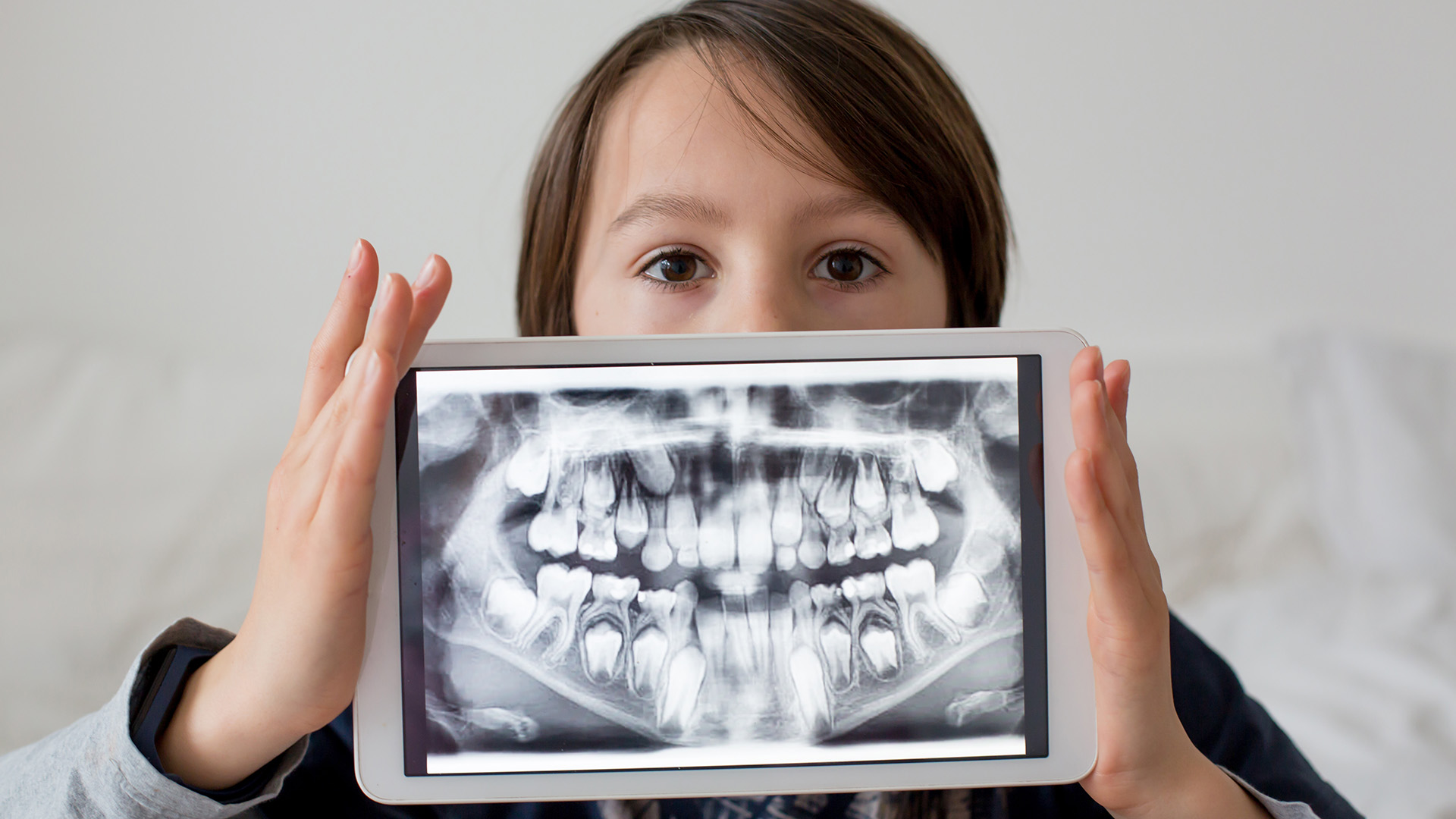
Digital dental x-rays are a safe, fast, and essential way to protect your child’s oral health. They show what a visual exam alone can miss, tiny cavities between teeth, developing roots, and jaw growth patterns, so our pediatric and orthodontic teams can prevent problems early, plan accurate treatment, and keep care comfortable and efficient. Learn what to know about digital x-rays for kids as we explain the benefits, safety, timing, and what to expect.
Why Digital X-Rays Matter for Children
Kids’ mouths change rapidly as baby teeth loosen, permanent teeth erupt, and jaws mature. Digital x-rays help us spot concerns early, when solutions are simpler and more conservative. They reveal cavities hidden between teeth, infections near roots, extra or missing teeth, and alignment issues that can affect chewing, speech, and confidence.
Beyond a visual exam, digital imaging lets us monitor eruption timing, root formation, and spacing. These details guide orthodontic planning, including whether a space maintainer is appropriate, when to start braces, and how to support healthy jaw growth.
Timing is individualized based on your child’s risk and stage of development. In early childhood, bitewing x-rays may be recommended every 6–24 months to check for cavities, especially when back teeth touch tightly. Around ages 6–8, images help us assess the first permanent molars and incisors. Between 9–12, we evaluate canine eruption paths and spacing. A panoramic or cone-beam image may be taken once or twice during key growth periods to guide orthodontic planning. Your dentist will tailor the schedule to your child’s needs.
Safety and Radiation: What Parents Should Know
Parents commonly ask about radiation. Digital x-rays use advanced sensors that require significantly less radiation than traditional film, often 50–80% less. A few dental images expose your child to about the same or less radiation than they would receive from everyday background sources over a short time.
We follow the ALARA principle, keeping exposure as low as reasonably achievable. Protective steps include child-sized exposure settings, focused beam collimation, high-speed digital sensors, and the use of lead aprons and thyroid collars are available by request. We only take images that are clinically necessary for accurate diagnosis and treatment.
How often x-rays are taken depends on your child’s cavity risk, history of dental treatment, and growth stage. Low-risk children may need bitewings less frequently, while higher-risk children benefit from closer monitoring. Orthodontic images are timed to inform growth and treatment decisions. We explain the rationale before each image and adjust recommendations as your child grows.
What to Expect During a Digital X-Ray Visit
Your child’s appointment is designed to be quick and comfortable. After a friendly check-in and a brief review of health history, we place a small digital sensor or plate in the mouth while your child gently bites down. A handheld or wall-mounted unit takes the image in seconds. Most children need only a few pictures, and we always show them what to expect before we begin.
To help kids relax, we use clear, child-friendly explanations and practice positioning. We may count together, use short “camera clicks,” and celebrate each success. For wiggly or nervous patients, we rely on tell-show-do techniques, distraction, and breaks when needed. Parents are welcome to ask questions at any time.
Images appear instantly on a chairside screen. We review them with you, pointing out teeth, roots, and developing structures, and explaining what we see. Digital files are securely stored in your child’s record and can be shared with you or other providers when needed. These images guide decisions about fillings, sealants, space maintainers, orthodontic timing, and ongoing monitoring.
Common Questions from Parents
- Are x-rays painful?
No. Digital x-rays are not painful. Your child may feel slight pressure from the sensor for a few seconds, and we can adjust positioning for comfort. - Will x-rays affect growth?
No. Dental x-rays use very low, localized radiation and do not impact growth or development. We use the lowest settings necessary and add protective measures for extra peace of mind. - How often does my child need them?
Frequency is personalized. Children with low cavity risk may need bitewings every 12–24 months, while higher-risk children may benefit from more frequent imaging. Orthodontic images are taken at key stages to guide treatment safely and effectively. We follow ALARA principles to limit exposure while ensuring accurate diagnosis. - How do digital x-rays support treatment decisions?
Clear images help us determine whether a small spot is truly a cavity, if a filling or sealant is appropriate, whether a space maintainer is needed after early tooth loss, and the best timing for braces or other orthodontic care. If you would like a second opinion, we can securely share your child’s images to avoid duplicate x-rays. - How are my child’s images protected and shared?
We store images in secure, HIPAA-compliant systems. With your consent, we can provide copies for your records or coordinate with your pediatrician or orthodontist. You can request access at any time, and we will explain what the images show in clear, easy-to-understand terms.
Types of Digital X-Rays for Kids
| Type | What It Shows | When It’s Used |
| Bitewing | Back teeth, bone levels, and areas between teeth where cavities often start | Routine cavity checks, typically every 6–24 months based on risk |
| Periapical | Entire tooth from crown to root tip and surrounding bone | To evaluate tooth pain, infections, or trauma |
| Panoramic | Full upper and lower jaws, sinus areas, and developing teeth | Orthodontic screening, assessing missing/extra teeth, and growth patterns |
| Cone-Beam CT (CBCT) | 3D view of teeth, jaws, and airway structures | Complex orthodontic planning or evaluating impacted teeth, used selectively |
Helping Your Child Have a Great Experience
- Schedule visits at a time of day when your child is well rested.
- Practice “open wide” at home and talk about taking quick “tooth pictures.”
- Bring a favorite small toy or comfort item for reassurance.
- Let us know about previous dental experiences so we can tailor our approach.
Our goal is to make imaging positive and stress-free, building trust that carries through to every visit.
The Takeaway
Digital x-rays are an important part of maintaining your child’s oral health. They are quick, comfortable, and designed with safety in mind. By revealing what we cannot see during a visual exam, they help us prevent problems, personalize orthodontic care, and keep treatment as conservative as possible.