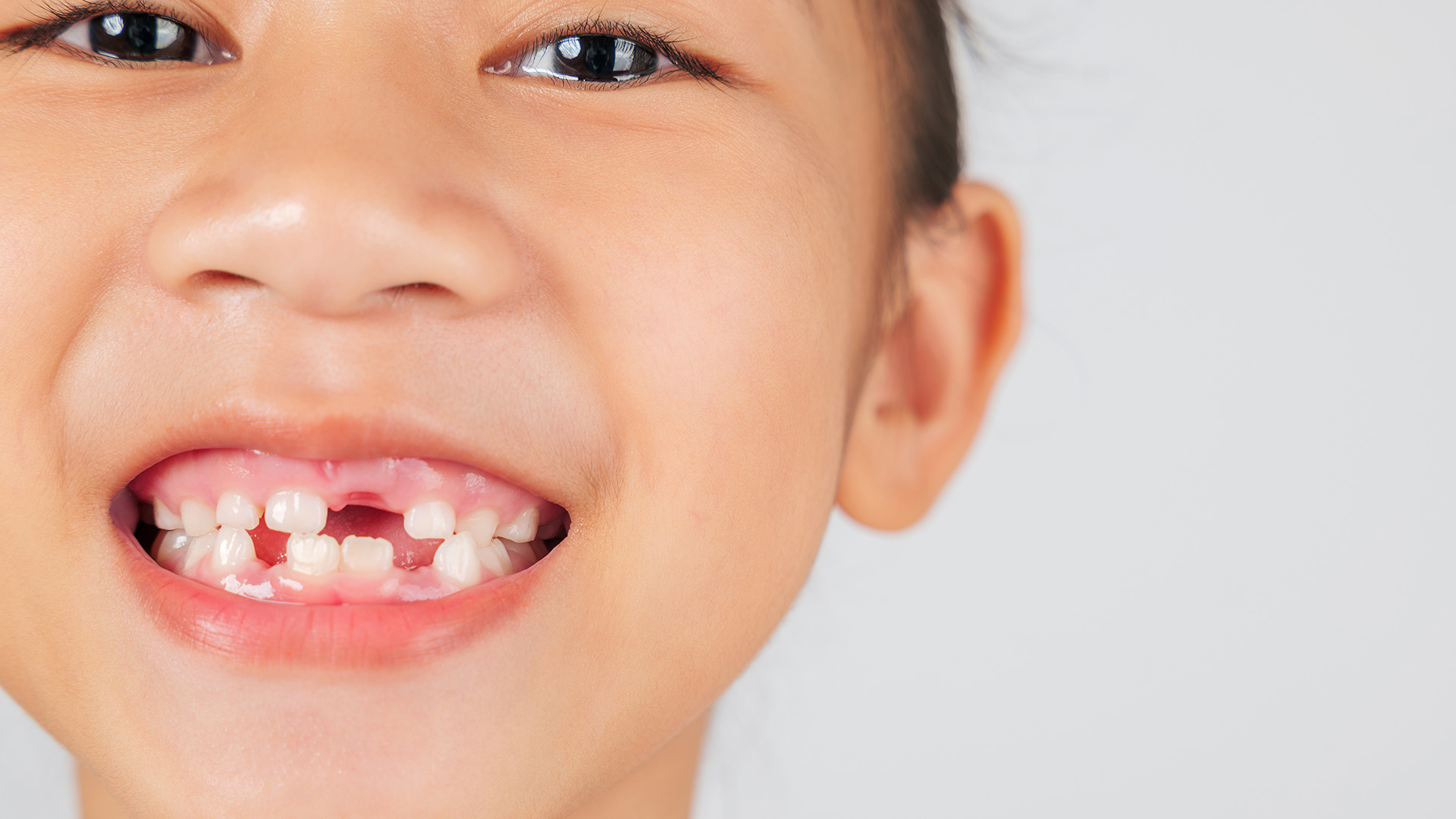
When a baby tooth comes out, many parents expect the adult tooth to appear quickly. Often it does, but eruption timing varies widely from child to child. If a tooth seems slow to show, it is usually still within the normal range. Below, we outline typical timelines, reasons for delays, when to see a dentist or orthodontist, and practical steps to support your child during this stage. Parents often ask how long it should take a permanent tooth to grow after a baby tooth falls out. The answer depends on the tooth type, space, and development, but the guidance below will help you know what to expect.
Normal Timeline for Permanent Tooth Eruption
Most children begin losing baby teeth around ages 6 to 7, with permanent teeth continuing to come in through the early teen years. The sequence typically begins with the first permanent molars erupting behind the baby molars around age 6, followed by the incisors, then premolars and canines. Second molars generally erupt between ages 11 and 13. Wisdom teeth, if present, often appear between ages 17 and 21.
After a baby tooth is lost, the permanent tooth underneath commonly becomes visible within a few weeks to a few months. Front teeth (incisors) tend to erupt within 1 to 3 months, while canines and premolars may take longer. It can be normal for some teeth to take up to 6 months to break through the gum tissue, especially if the permanent tooth is still forming or the baby tooth’s root took longer to resorb.
There is a wide range of normal. Genetics, jaw growth, and the development stage of each tooth influence timing. Small side-to-side differences are common; for example, one incisor may erupt a few months before its partner. As a general guideline, if a tooth has not erupted about 6 months after the corresponding tooth on the opposite side, or if your child is well beyond typical age ranges, it is wise to schedule an evaluation. If you are wondering how long it takes a permanent tooth to grow after a baby tooth falls out, the table below provides a useful reference.
| Tooth Group | Typical Age Range | Time After Baby Tooth Loss |
| Incisors | 6–8 years | Often 1–3 months |
| Canines | 9–12 years | Several months; up to 6 months can be normal |
| Premolars | 10–12 years | Several months; up to 6 months can be normal |
| Second molars | 11–13 years | Do not replace baby teeth |
Common Reasons a Permanent Tooth May Be Delayed
Some children simply follow a slower but normal timetable. Other times, specific factors influence eruption and may require monitoring or treatment.
- Space and developmental differences: If a permanent tooth never formed (congenital absence), it will not erupt. Crowding can block a tooth’s path, while extra space can allow drifting and alter the eruption path, potentially delaying appearance or causing a tooth to emerge at an unusual angle.
- Impaction or ectopic eruption: A tooth can be trapped under the gum or bone due to lack of space, an abnormal eruption path, or a physical obstruction. Ectopic eruption means the tooth comes in the wrong position, such as a canine high in the gum or an incisor erupting behind the baby tooth. Retained baby root fragments can also obstruct the permanent tooth.
- Medical, nutritional, and trauma-related factors: Significant injury to a baby tooth may disturb the developing permanent tooth and slow eruption. Systemic conditions, endocrine disorders, certain medications, and nutritional deficiencies can also affect tooth development and timing.
Signs That You Should See an Orthodontist or Dentist
Minor timing variation is common. The following signs suggest it is time for a professional evaluation:
- An empty space remains more than 6 months after a baby tooth falls out, especially if the matching tooth on the other side has already erupted.
- Prolonged delay beyond expected age ranges for that tooth.
- Persistent pain, swelling, tenderness, or any signs of infection around the area.
- A permanent tooth erupting behind a baby tooth that is not loosening, or a tooth emerging at a pronounced angle.
- Noticeable asymmetry where one side erupts and the other side lags significantly.
At your visit, the dentist or orthodontist will examine the area and may take dental X-rays to evaluate the presence, position, and development stage of the permanent tooth. Panoramic or small periapical films can show if the tooth exists, its orientation, and whether an obstruction is present. Early identification helps determine whether simple observation or timely intervention is best.
What Parents Can Do While Waiting for a Tooth to Erupt
Good home care and gentle monitoring help keep the area healthy and comfortable.
- Brush twice daily with a soft-bristled toothbrush and use fluoride toothpaste appropriate for your child’s age.
- Help your child floss the adjacent teeth to keep the space clean and reduce plaque buildup.
- If the gums are tender, a cool compress can soothe discomfort. Use age-appropriate acetaminophen or ibuprofen as needed and follow dosing instructions. Consult your pediatrician if you have questions.
- Check the area weekly for signs of the tooth peeking through, gum changes, redness, or swelling.
- If a baby tooth remains in place while the permanent tooth is visible behind or beside it, schedule a dental visit. In some cases, removing a retained baby tooth creates a clear path and allows normal eruption.
Early orthodontic evaluation, often around age 7, helps identify spacing needs and guide growth. If a baby tooth is lost early, a space maintainer may preserve room for the permanent successor. Regular monitoring allows your orthodontist to time any intervention so the permanent tooth has the best chance to erupt naturally and in the right position.
Potential Consequences and Treatment Options for Late Eruption
If a permanent tooth fails to erupt on its own, nearby teeth may drift, causing crowding, rotations, or bite imbalance. A tooth that erupts out of position can affect appearance and function, sometimes increasing the need for orthodontic correction. In select cases, a tooth remains impacted and needs surgical assistance to enter the arch.
Treatment is tailored and typically progresses step by step:
- Observation: Appropriate when X-rays show a developing tooth with a clear eruption path. Your provider will monitor progress over time.
- Guided eruption: Removing obstacles, extracting a retained baby tooth, or using limited orthodontic appliances to create space can allow the tooth to erupt naturally.
- Surgical exposure with orthodontic guidance: For impacted teeth, a minor procedure can expose the tooth and attach a small bracket and chain to guide it into position.
- Managing congenitally missing teeth: Options include closing the space orthodontically or maintaining space for a future replacement, such as a dental implant once growth is complete.
Timing matters. Acting too early may be unnecessary, while waiting too long can increase complexity. An individualized plan based on your child’s growth, dental development, and tooth position offers the best outcome. Regular checkups with your dentist and timely referral to an orthodontist help ensure delayed eruption is managed effectively and comfortably.
Key Takeaways
- After a baby tooth falls out, a permanent tooth often appears within weeks to a few months; up to 6 months can still be normal, especially for canines and premolars.
- Individual variation is common, and small asymmetries are expected.
- See a dentist or orthodontist if an empty space persists beyond 6 months, the opposite-side tooth erupted much earlier, or you notice pain, swelling, or abnormal eruption patterns.
- Good hygiene, gentle monitoring, and early orthodontic evaluation around age 7 support healthy eruption and simplify treatment if needed.